
A hoist inspection schedule sounds simple enough: check the equipment, write it down, move on. But most workshops don’t actually follow a consistent process. Inspections get pushed back, log books go blank for weeks, and maintenance only kicks in after something breaks.
We see this regularly at RUDAustralia, where we work with lifting and crane operations across Brisbane, Ipswich, and beyond. The workshops that stay compliant aren’t doing anything complicated; they’ve just built a consistent inspection routine and stuck with it.
In this guide, we’ll walk you through how to build a hoist maintenance schedule for your vehicle hoists and lifting equipment. You’ll learn what to inspect, how often, and how your hoist’s duty cycle should shape the whole plan.
Why Every Workshop Needs a Hoist Inspection Schedule
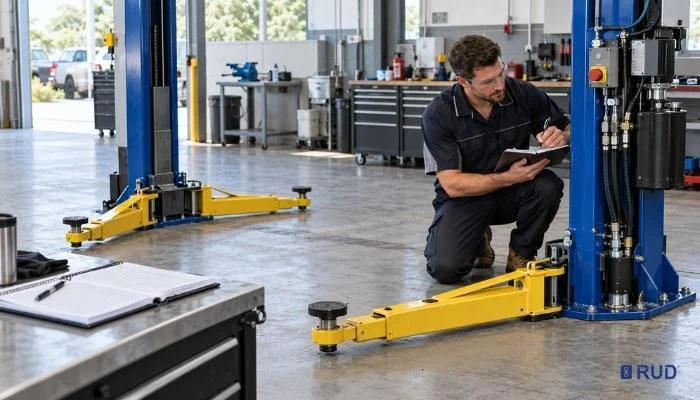
A hoist inspection schedule gives you a fixed routine for catching wear, damage, and compliance gaps before they lead to downtime or safety incidents.
Without one, most workshops default to reactive maintenance, and that always costs more in emergency repairs and lost productivity. Even a single unplanned breakdown can burn through twice what a full year of scheduled inspections would cost.
A recent WorkSafe Queensland review found that many businesses didn’t fully understand their lifting equipment inspection obligations. If your records aren’t up to date, an inspector will notice.
In our experience, workshops that commit to regular inspections get more service life out of their hoist equipment and deal with fewer emergency callouts. For any operation running high-risk equipment like cranes and hoists, a written maintenance schedule isn’t optional. It’s how you maintain smooth operation and keep operator safety risks low.
Hoist Inspection Requirements Under Australian Standards
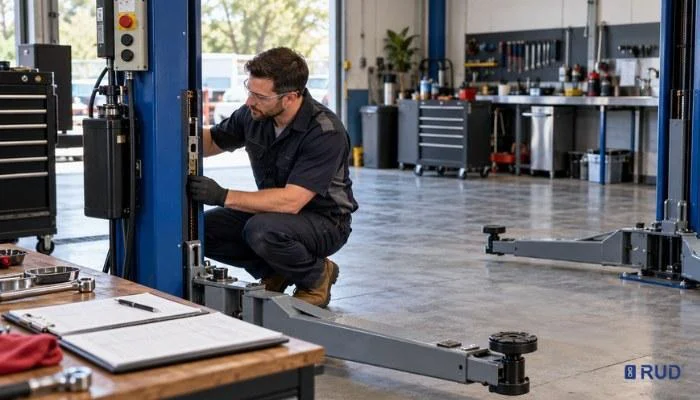
Now, let’s look at what the standards actually require, because Australian Standards don’t leave hoist inspection up to you.
Two standards cover most of the ground here. AS 2550.1 applies to the safe use of cranes, hoists, and winches, while AS 2550.9 deals specifically with vehicle hoists. Both outline pre-operational, routine, and major inspection tiers your operation needs to follow.
That’s the framework, but the part most managers miss is the recordkeeping.
Regulation 213 of the Work Health and Safety Regulations is clear on this. All maintenance requirements for plant must be carried out by a competent person with the right training (that includes logbooks, service dates, and technician sign-offs).
WorkSafe has issued compliance notices to workshops operating without valid maintenance records, which puts their equipment at risk of being pulled from service.
Beyond recordkeeping, inspectors also look at equipment age. Any hoist or crane that exceeds its design life will need a formal assessment by qualified maintenance personnel before it can stay in safe operation. And for crane operations and lifting operations under safety regulations, that design life assessment isn’t optional.
How to Build a Maintenance Checklist for Your Lifting Equipment
Once that’s clear, the next step is building a maintenance checklist that covers every inspection tier. For a solid starting point, the federal code of practice recommends an inspection register that records responsibilities, frequencies, and test results for all lifting equipment on site.
Your checklist should cover two main areas: what operators check before every use, and what trained personnel inspect at longer intervals.
Pre-Operational Checks
Before each shift, operators should inspect the hoist for visible damage, abnormal noise, and any loose fittings around moving parts and hooks.
From there, verify that controls respond correctly, chains show no deformation, and load markings are legible. If a hoist operator finds any fault during pre-operational inspections, the equipment gets tagged out until a competent person clears it (even if the truck’s due out that afternoon).
Routine and Annual Inspections
Your routine inspections should happen every 12 weeks, or follow the manufacturer’s recommended schedule. When inspecting hoists at routine intervals, check wire rope and chain for broken strands, corrosion, and wear.
On the mechanical side, inspect bearings, lubrication levels, gearbox oil level, and loose terminals in wiring and cables around hydraulic components.
Annual inspections go even further. Maintenance personnel with the right training should verify mechanical integrity across structural members and electrical systems, and check for leaks. After that, every finding goes into the logbook, including the date, inspector’s name, and any repair or service carried out.
These periodic inspections help you identify wear before it becomes a safety risk.
Safety Devices to Include in Every Vehicle Hoist Inspection
Every vehicle hoist inspection should include functional testing of the safety devices that protect operators and anyone near a suspended load. It’s one of those things that gets overlooked until a device fails during a lift.
So make sure you verify these at every routine service check:
- Overload Limiters and Limit Switches: These control how much load a crane or hoist can handle. Test each one to confirm it cuts operation before it exceeds the rated load capacity.
- Emergency Stop Controls: Every hoist operator should know where the emergency stop and E-stop controls are installed. Check that they engage correctly and hold under no-load conditions.
- Safety Latches and Hooks: Hooks should be free of cracks and wear around the throat opening. Safety latches should snap shut without sticking (and inspectors do check for this).
- Hydraulic Lines and Cables: Visible corrosion, leaks, and cable damage are the main things to look for here. On vehicle hoists, support arm safety locks are a critical part of the inspection, and WorkSafe flags them as a common failure point.
Outside of those, audible alarms and load markings are easy to miss, but both are safety features tied to compliance. If a label is faded or an alarm doesn’t sound, the hoist isn’t fit for safe use until you fix it.
How Duty Cycle Affects Your Hoist Inspection Schedule
Every hoist has a rated duty cycle from the manufacturer. That rating covers load cycles, hours of operation, and rest periods before components like chains, bearings, and wire rope start to deteriorate. We’ve seen hoists rated for light-duty use wear out in under two years. In every case, the workshop was running them at full capacity five days a week.
That’s why the standards only give you a baseline rather than a ceiling. Track your actual usage against the rated cycle, and you’ll maintain smooth operation while catching wear, vibration, and repair needs early.
Build a Hoist Inspection Schedule That Keeps You Compliant
Now that you know what to check and when, the next step is putting your hoist inspection schedule into action. Make sure you log and track every service. That includes everything from pre-operational checks on hooks and load points to annual inspections carried out by a competent person with the right training.
And if your hoists need repair, recalibration, or a compliance review, RUDAustralia can help. Our team works with workshops across Brisbane, Ipswich, and beyond to keep lifting and crane equipment inspection-ready and crew safety where it should be.
Read more: Electric vs Hybrid Cars: Understanding the Everyday Differences