
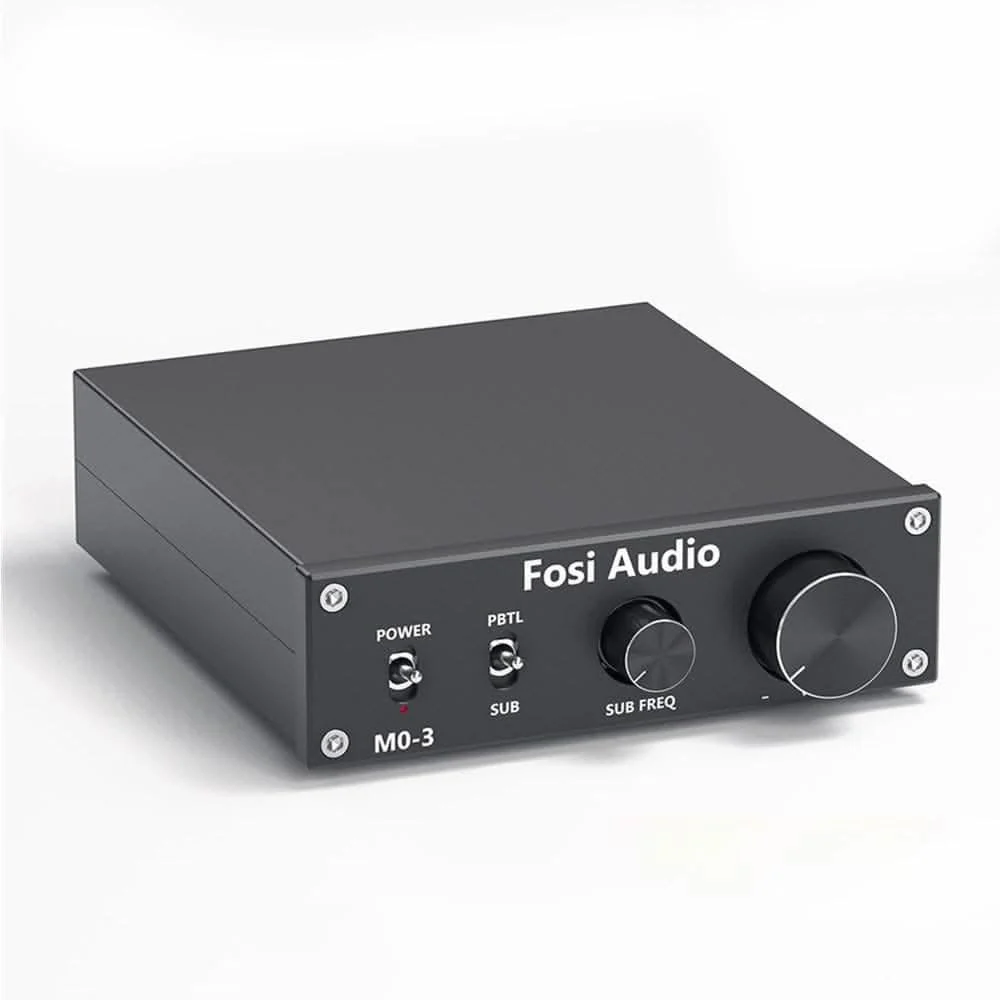
Home theater bass lives or dies in the setup, and most people never set it up at all. The subwoofer gets placed where it fits, plugged in with whatever settings it shipped with, and judged on the first explosion it reproduces. If that explosion sounds impressive, the job is declared done — even if dialogue has been swimming in rumble for two hours. The three controls that decide all of this are crossover, gain, and phase, and none of them is as technical as the names suggest.
Think of it this way: your main speakers handle the story — voices, music, detail — and the subwoofer handles the weather: thunder, engines, the floor-shaking moments. A good subwoofer amplifier setup is simply a clear agreement about where the story ends and the weather begins, how loud the weather is allowed to get, and whether the two arrive at your seat at the same time.
Crossover: Deciding Who Plays What
The crossover is a dividing line measured in hertz. Below the line, the subwoofer plays; above it, your main speakers play. For most living-room systems, 80 Hz is the honest starting point — it is the setting cinemas standardised on, and it suits typical bookshelf and tower speakers alike. If your main speakers are small satellites, try 100 Hz; if they are large towers that genuinely reach deep, 60 Hz can work.
Why it matters: set the crossover too high and the subwoofer starts playing notes it localises badly, so bass seems to come from the corner instead of the screen, and male voices gain a chesty thickness. Too low, and a hole opens between the speakers and the sub where bass guitar and film scores lose their foundation. The subwoofer amplifier in a well-matched system makes this adjustment easy to reach and repeat, which encourages the experimenting that actually gets it right.
Gain: How Loud the Weather Gets
Gain is simply the subwoofer’s own volume knob, and it is the control most often set wrong — usually too high, because a loud subwoofer is fun for exactly one action scene. The goal is not to hear the subwoofer. The goal is to notice when it is switched off. Set correctly, explosions have genuine scale, but a door closing in a quiet scene does not arrive with a small earthquake attached.
If your receiver runs an automatic calibration, let it set the level first, then adjust by ear in small steps. Most people end up a touch above the calibrated value for films and right back at it for music. That is taste, not error — as long as dialogue stays clean, the subwoofer amplifier is doing its job at whatever level suits your room.
Phase: Getting the Timing to Agree
Phase sounds mysterious and is not. Your speakers and subwoofer sit in different places, so their sound reaches your seat at slightly different times. Where they overlap near the crossover, mistimed waves can partially cancel, and the bass thins out no matter how you set the gain. The phase control — a switch marked 0/180 on some units, a dial on a good subwoofer amplifier — nudges the subwoofer’s timing until the two sources reinforce instead of fighting.
You cannot set phase by looking at it. You set it by listening, from your seat, which is why the routine below asks for a helper or a long cable run of patience.
A word about where the subwoofer sits, because no control fully compensates for a bad seat at the table. Corners load a room with maximum bass and maximum unevenness; a position along the front wall, near the main speakers, usually blends more honestly and keeps the timing close to theirs. If you have freedom to move it, the old trick still works: place the subwoofer temporarily in your listening seat, play something with steady bass, and crawl around the front of the room listening for where it sounds fullest and most even. That spot — undignified method, excellent results — is where the subwoofer wants to live, and where your subwoofer amplifier settings will need the least correcting afterwards.
A Simple Tuning Routine (About Fifteen Minutes)
- Set the crossover to 80 Hz and the phase to 0. Put on a scene or track with steady, repeating bass — a film score works well.
- From your main seat, have a helper turn the gain up slowly from zero. Stop at the point where the bass feels full and anchored to the screen, before it calls attention to itself.
- Now flip the phase switch (or turn the dial slowly). Keep whichever position gives the fuller, tighter bass at your seat. The difference is obvious when it matters and negligible when it does not.
- Re-check with dialogue at normal volume. If voices sound thick, lower the crossover a step or trim the gain slightly. Then leave it alone for a week of real watching.
That routine, done once with a subwoofer amplifier whose controls are reachable and repeatable, transforms movie night more reliably than a bigger subwoofer bought on top of bad settings. Thunder should feel like weather — present, powerful, and never confused with the story being told over it.
Read more: Why Data Privacy Has Become a Major Technology Conversation