
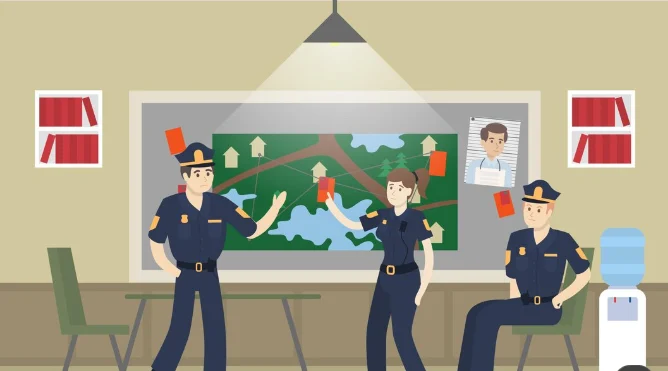
Law enforcement officers face unpredictable, high-stress emergency situations every day, ranging from active shooter incidents and natural disasters to high-speed vehicle pursuits. Operating effectively during critical events requires far more than mere instinct or split-second reaction; it demands rigorous tactical preparation, continuous mental conditioning, precise equipment maintenance, and seamless team coordination. Understanding the multi-faceted preparation process reveals how law enforcement agencies build operational readiness, protect public safety, and ensure officers navigate life-threatening scenarios calmly, decisively, and professionally.
Rigorous Tactical Training and Scenario-Based Simulations
Tactical training forms the core foundation of emergency readiness for law enforcement officers. Agencies conduct continuous, hands-on instructional programs that simulate real-world critical incidents under controlled yet highly realistic conditions.
Scenario-based training utilizes active role-players, shoot-house facilities, non-lethal marking cartridges, and advanced virtual reality simulators. These immersive setups force officers to process rapid environmental changes, assess threat levels, apply de-escalation techniques, and execute precise tactical movements under realistic stress levels.
Additionally, officers undergo regular instruction in room-clearing mechanics, active threat response protocols, physical defensive tactics, and emergency medical care. Repeated exposure to realistic scenarios builds muscle memory, helping officers overcome panic and execute proven tactical protocols automatically during actual field emergencies.
Utilizing Immersive Virtual Reality and Shoot-House Simulators
Interactive virtual reality platforms allow officers to experience hundreds of diverse emergency scenarios, refining split-second decision-making abilities safely.
Shoot-house environments test spatial movement, team communication, and target discrimination under low-light conditions. Realistic simulators sharpen critical tactical skills.
Practicing Emergency Medical Response and Tactical Combat Casualty Care
Officers receive extensive training in applying tourniquets, chest seals, and pressure dressings to treat severe trauma injuries on scene rapidly.
Mastering immediate life-saving care enables officers to stabilize wounded citizens or partner officers before emergency medical technicians arrive. Tactical medical training saves critical lives.
Mental Conditioning and Stress Management Techniques
Physical preparedness represents only half of emergency readiness; psychological resilience is equally vital when navigating high-intensity critical calls. High-stress encounters trigger massive adrenaline surges that can impair cognitive processing if unmanaged.
Agencies train officers in cognitive stress management frameworks, such as visualization, mental rehearsal, and tactical breathing techniques. Practicing controlled diaphragmatic breathing lowers heart rates, suppresses panic responses, and prevents perceptual distortions like tunnel vision or auditory exclusion.
Furthermore, mental conditioning emphasizes stress inoculation—gradually exposing officers to escalating stressors in training to build psychological tolerance. Mental resilience allows officers to maintain situational awareness, process incoming information clearly, and make sound legal decisions under extreme pressure.
Utilizing Tactical Diaphragmatic Breathing Controls
Executing controlled four-second breathing cycles regulates nervous system arousal, helping officers maintain calm focus during dynamic encounters.
Lowering physiological heart rates preserves fine motor skills and spatial awareness during high-stress calls. Controlled breathing stabilizes mental performance.
Applying Mental Rehearsal and Visualization Strategies
Officers mentally review potential emergency responses before calls arrive, visualizing successful tactical maneuvers and de-escalation pathways clearly.
Pre-visualizing critical actions accelerates cognitive processing speeds when unexpected threats materialize. Mental rehearsal enhances field responsiveness.
Comprehensive Equipment Checks and Fleet Maintenance Routines
An officer’s gear serves as a vital lifeline during emergency responses, making routine equipment inspection a non-negotiable daily protocol. Before stepping into a patrol vehicle, officers conduct meticulous inspections of all personal duty gear and vehicle systems.
Daily checks involve inspecting ballistic body armor, testing communication radios, verifying firearm functionality, checking non-lethal tools, and organizing medical kits inside driver reach zones. Ensuring every tool functions flawlessly eliminates dangerous gear failures during active calls.
Vehicle checks are equally critical, involving inspections of brake systems, tire pressures, emergency lighting arrays, and acoustic warning systems. Activating the police siren during pre-shift checks verifies that visual and acoustic warning equipment functions properly to clear traffic safely during high-speed emergency runs.
Conducting Pre-Shift Duty Belt and Armor Inspections
Verifying that body armor fits securely and duty gear sits correctly ensures rapid, unhindered access to defensive tools during emergencies.
Testing portable radio battery levels guarantees uninterrupted communication links with central dispatch centers. Pre-shift checks prevent critical gear failure.
Verifying Emergency Vehicle Systems and Patrol Fleet Readiness
Checking tire tread depth and fluid levels ensures patrol vehicles handle safely during high-speed emergency response driving.
Testing emergency lights and audible sirens guarantees surrounding traffic receives clear warning signals during pursuits. Vehicle maintenance protects road safety.
Advanced Emergency Vehicle Operations and Pursuit Tactics
Navigating urban traffic or rural highways at elevated speeds during critical emergency calls requires specialized driving skills. Emergency Vehicle Operations Courses provide officers with practical, hands-on driving instruction under extreme conditions.
EVOC training covers high-speed precision maneuvering, evasive skid control, night driving, collision avoidance, and tactical pursuit termination techniques like the Precision Immobilization Technique. Officers learn to balance rapid arrival speeds with public safety risks.
Furthermore, officers practice spatial awareness behind the wheel, constantly scanning intersections, predicting unpredictable civilian driver reactions, and adjusting speeds for rain, ice, or fog. Advanced driver training ensures officers arrive at emergency scenes safely without causing secondary collisions.
Mastering Skid Control and Evasive Steering Maneuvers
Practicing vehicle recovery on slick wet skid-pads teaches officers to retain vehicle control during sudden high-speed steering corrections.
Evasive driving instruction prevents loss of vehicle control during unexpected traffic obstructions. Driving mastery safeguards emergency transit.
Executing Safe Intersection Clearance Procedures
Slowing down and verifying that cross-traffic lanes are completely clear before proceeding through red lights prevents broadside intersection crashes.
Anticipating civilian driver panic reactions ensures officers navigate busy intersections smoothly during emergency runs. Intersection protocols preserve public safety.
Strategic Incident Command Systems and Inter-Agency Coordination
Large-scale emergencies—such as natural disasters, active threats, or major hazardous material spills—require seamless coordination across multiple public safety organizations. Law enforcement officers train extensively within standardized Incident Command System frameworks.
ICS protocols establish a clear chain of command, unified terminology, and structured resource management strategies. Utilizing standardized incident management allows police departments, fire services, emergency medical teams, and government agencies to integrate operations effortlessly during complex disasters.
Regular joint-agency training exercises simulate multi-jurisdictional disasters, allowing different response teams to practice shared radio communications, joint rescue operations, and unified command decisions. Inter-agency coordination guarantees an organized, efficient public safety response during community crises.
Standardizing Incident Command Structure and Terminology
Utilizing universal command terminology eliminates communication confusion among responding police, fire, and medical teams.
Establishing a centralized command post streamlines tactical decision-making and resource allocation across agencies. Standardized command optimizes operational control.
Executing Multi-Agency Disaster Response Exercises
Simulating large-scale natural disasters alongside regional fire and medical agencies builds strong inter-professional operational trust.
Joint training identifies communication bottlenecks and equipment incompatibilities prior to real-world community emergencies. Multi-agency drills strengthen regional readiness.
Post-Incident Review, Debriefing, and Psychological Support
Preparation for future emergency situations relies heavily on evaluating past performances. Following major critical incidents, law enforcement agencies conduct thorough operational debriefings and After-Action Reviews.
During an After-Action Review, involved officers and supervisors analyze response timelines, communication clarity, tactical movements, and equipment performance objectively. Identifying what worked well and pinpointing areas needing improvement directly informs future agency training curricula and operational policy updates.
Additionally, modern agencies prioritize post-incident psychological support, offering peer support teams, professional counseling, and critical incident stress debriefings. Supporting officer mental health after traumatic events ensures long-term emotional resilience, keeping officers psychologically ready for future field duties.
Conducting Objective After-Action Tactical Reviews
Analyzing critical incident response data helps supervisors identify tactical training gaps and refine agency operational protocols.
Constructive debriefings encourage continuous learning, ensuring field teams adapt smoothly to evolving threat patterns. After-action reviews drive continuous improvement.
Providing Critical Incident Stress Management Support
Offering immediate peer support and mental health counseling helps officers process traumatic critical call experiences healthily.
Prioritizing officer psychological wellness combats burnout and preserves long-term workforce operational readiness. Mental health support safeguards officer well-being.
Conclusion
Law enforcement preparation for emergency situations is a continuous, comprehensive commitment that combines scenario-based tactical training, psychological stress conditioning, daily equipment checks, advanced driving instruction, inter-agency coordination, and post-incident debriefing. By training rigorously for complex scenarios, checking duty gear meticulously, mastering stress management techniques, and fostering inter-agency teamwork, police officers transform high-stress uncertainty into controlled, professional execution. This dedication to continuous readiness ensures that when critical emergencies strike, law enforcement officers respond swiftly, protect public safety effectively, and navigate life-threatening challenges with skill, courage, and composure.
Read more: The Role of Proactive Tax Consulting in Preserving More of the Wealth You Have Already Built