
Text messaging and online communication have completely reshaped how people use language. Short forms, abbreviations, and acronyms now dominate chats across platforms like WhatsApp, Instagram, Snapchat, TikTok, and even email in informal settings. Among these abbreviations, one that often confuses users is “JW”.
At first glance, “JW” may look simple, but its meaning can change depending on context, tone, and even the generation using it. In modern digital communication, understanding slang like “JW” is not just about translation—it’s about interpreting intent, emotion, and conversational style.
In this complete guide, we will break down everything you need to know about what “JW” means in text, how it is used in real conversations, how its meaning shifts depending on tone, and how it compares with similar slang expressions such as “IKYFL”. You will also find practical examples, usage tips, and advanced communication insights that help you use it correctly in any situation.
What Does JW Mean in Text?
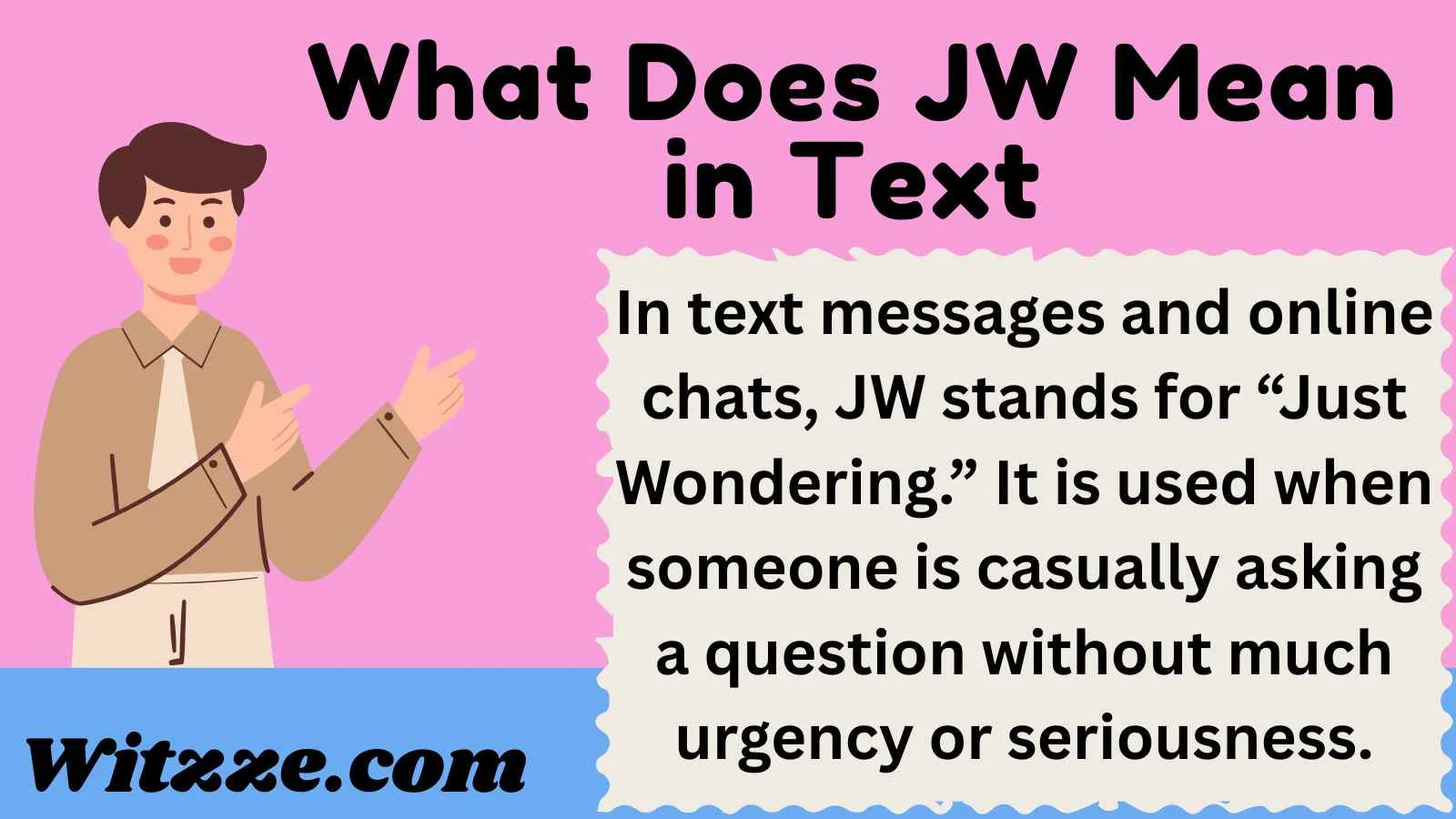
The most common meaning of JW in texting is:
JW = “Just Wondering”
It is typically used when someone wants to ask a question casually, without sounding too serious, demanding, or intrusive.
Basic Example:
- “JW, are you coming to the party tonight?”
In this sentence, the speaker is politely asking for information while keeping the tone relaxed.
Core Meaning and Intent Behind JW
Unlike formal language, slang abbreviations are not just about saving time—they also carry emotional tone. “JW” helps soften a question.
Why people use JW:
- To sound polite instead of direct
- To reduce pressure in a conversation
- To make a question feel casual
- To avoid sounding demanding or aggressive
Tone behind JW:
- Neutral
- Curious
- Friendly
- Non-confrontational
It is often used when the speaker is unsure if their question might feel too direct.
How JW Is Used in Real Conversations
To fully understand JW, it’s important to see how it works in different communication styles.
1. Casual Conversations
In everyday texting between friends:
- “JW, what time are you leaving?”
- “JW, did you finish the assignment?”
Here, it simply replaces “I’m just asking” or “I was wondering.”
2. Social Media Chats
On platforms like Instagram or Snapchat:
- “JW, where did you get that jacket?”
- “JW, are you still in school?”
It helps keep the conversation light and natural.
3. Professional Informal Chats
Even in semi-professional environments (like coworker chats):
- “JW if the report is ready yet.”
- “JW, are we still meeting at 3?”
However, in strict formal communication, JW is usually avoided.
JW vs Fully Written Alternatives
To understand JW better, compare it with full phrases:
| JW | Full Form Equivalent |
|---|---|
| JW, are you free? | I was just wondering if you are free |
| JW, what happened? | I was just wondering what happened |
| JW, did you see this? | I just wanted to ask if you saw this |
JW is essentially a shortcut that keeps meaning intact but reduces formality.
Nuances of Tone in JW
One of the most important aspects of modern slang is tone interpretation. JW can feel different depending on punctuation, context, and timing.
1. Friendly JW
- “JW, how are you doing?”
This feels warm and conversational.
2. Neutral JW
- “JW if it’s done yet.”
This is purely informational.
3. Slightly Serious JW
- “JW why you didn’t reply yesterday?”
This can feel slightly questioning or concerned.
Even though the words are the same, the emotional impact changes.
Common Misunderstandings About JW
Many users misinterpret JW because it is short and context-dependent.
Misconception 1: JW means something formal
It does not. It is strictly informal.
Misconception 2: JW is rude
It is generally not rude. However, tone can make it sound passive-aggressive if used poorly.
Misconception 3: JW has only one meaning
While “Just Wondering” is the most common, rare alternate interpretations exist in niche communities, but they are not widely used in texting.
JW in Modern 2026 Digital Communication Trends
In current digital communication trends, slang like JW continues to evolve. Short-form expressions are becoming more integrated with AI-assisted messaging, predictive text, and voice-to-text systems.
Key trends affecting JW usage:
- Increased use in quick mobile replies
- Integration in auto-suggest keyboards
- More usage in Gen Z and Gen Alpha messaging styles
- Decline in long-form questioning in casual chat
Even though communication tools are becoming more advanced, abbreviations like JW remain popular because they are efficient and socially flexible.
JW Compared to Similar Slang
To understand JW better, it helps to compare it with similar expressions.
1. “I was wondering”
- More formal version of JW
- Used in polite conversation
2. “Curious”
- More emotional and expressive
- Less neutral than JW
3. “Just asking”
- Slightly more direct
- Can sound sharper depending on tone
JW remains the most balanced and neutral version among them.
Related Slang: IKYFL Meaning
Another popular modern slang term often searched alongside JW is:
IKYFL = “I Know You F*ing Lying”**
This phrase is used to express disbelief or shock in informal conversations. It is very different in tone compared to JW.
Key difference:
- JW = calm curiosity
- IKYFL = strong emotional reaction
Example of IKYFL:
- “You said you finished the entire project in one hour? IKYFL.”
While JW softens communication, IKYFL intensifies emotional expression.
When to Use JW (Best Practical Guide)
Using JW correctly depends on situation and audience.
Use JW when:
- Talking to friends
- Asking casual questions
- You want to sound polite but not formal
- Messaging quickly
Avoid JW when:
- Writing formal emails
- Communicating with authorities
- Job applications
- Academic writing
In formal settings, always use full phrases instead.
Advanced Communication Insight: Why JW Works So Well
From a linguistic perspective, JW is successful because it performs three important functions:
- Reduces emotional pressure
- Maintains conversational flow
- Signals friendliness and openness
Modern communication increasingly relies on such “softening markers” to prevent misunderstandings in text-based messaging, where tone is not audible.
10 Best Real-Life Text Examples Using JW
Here are carefully crafted examples showing how JW is used naturally in different situations:
- “JW, are you still coming tonight or should I cancel?”
- “JW if you’ve seen my message earlier.”
- “JW, what’s your opinion on this idea?”
- “JW if the store is still open.”
- “JW, did you understand the assignment?”
- “JW why you were offline yesterday.”
- “JW, are we still meeting at the same place?”
- “JW if you want me to save you a seat.”
- “JW, how long will it take to finish?”
- “JW if you’re okay after everything happened.”
Each example shows how JW softens the question while keeping it clear and understandable.
How to Choose Between JW and Other Expressions
Choosing the right expression depends on relationship and intent.
If you want to sound polite:
Use JW
If you want to sound formal:
Use full sentence (I was wondering)
If you want to sound emotional:
Avoid JW and use expressive phrases
If you want to sound direct:
Skip JW completely
Final Thoughts
“JW” may look like a simple abbreviation, but it plays an important role in modern digital communication. It helps people express curiosity in a soft, friendly, and non-intrusive way. In an era where messages are often short and fast, JW allows users to maintain politeness without adding unnecessary words.
At the same time, understanding context is essential. The same abbreviation can feel friendly, neutral, or slightly serious depending on how it is used. That is why mastering slang like JW is not just about memorizing meaning it is about understanding communication style.
As digital language continues to evolve, expressions like JW will remain a key part of how people interact online, especially in casual conversations where tone matters just as much as words.