
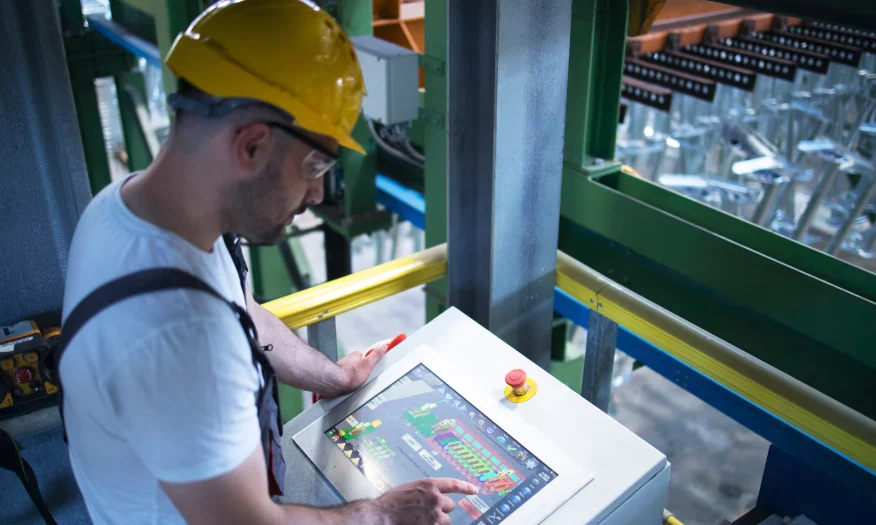
Electric motors are essential components in modern industrial and commercial operations. They power conveyor systems, pumps, fans, compressors, manufacturing machinery and automated equipment. However, simply connecting a motor to a power supply does not always provide the level of control required for efficient and reliable operation.
Motor controllers help regulate how electric motors operate by managing functions such as starting, stopping, speed, direction and torque. Depending on the application, they can also provide protection against electrical faults and excessive operating loads.
Understanding the different controller types and their features is important when selecting equipment for manufacturing facilities, automation systems and industrial machinery.
What Is a Motor Controller?
A motor controller is an electrical or electronic device that manages the operation of an electric motor. It controls how power is delivered to the motor to achieve the required movement and performance.
Depending on its design, a controller may allow an operator to start or stop a motor manually, adjust its rotational speed or programme automatic operating sequences.
More advanced controllers can communicate with programmable logic controllers (PLCs), sensors and other automation equipment. This allows motors to operate as part of a coordinated industrial process.
Motor controllers can also incorporate protective functions such as overload monitoring, overcurrent protection and fault detection. The specific protection features depend on the controller type and installation.
Different Types of Motor Controllers
Motor controllers are designed for different motor technologies and operating requirements. The most common categories include AC, DC, servo and stepper motor controllers.
1. AC Motor Controllers
AC motor controllers regulate the operation of motors powered by alternating current. One widely used solution is a variable frequency drive (VFD), which adjusts the frequency and voltage supplied to an AC motor to control its speed.
These controllers are commonly used in applications where motor speed needs to change according to operating demand.
Typical applications include:
- Industrial pumps and water circulation systems.
- Ventilation fans and air handling equipment.
- Conveyor belts and material handling machinery.
- Compressors and production equipment.
By matching motor speed to actual process requirements, a suitable drive can help reduce unnecessary energy consumption in variable-load applications.
2. DC Motor Controllers
DC motor controllers regulate the voltage and current supplied to direct-current motors. Depending on the design, they can control motor speed, direction and torque.
Some controllers use pulse-width modulation (PWM) to adjust the average power delivered to a motor. This provides a practical method of controlling speed while maintaining efficient operation.
DC motor controllers are commonly used in small industrial machines, electric actuators, battery-powered equipment and certain conveyor systems.
3. Servo Motor Controllers
Servo controllers are designed for applications requiring precise motion control. They work with servo motors and typically use feedback from an encoder or another position sensor to monitor actual motor movement.
The controller compares the required position or speed with the feedback signal and adjusts the motor output accordingly.
This closed-loop control allows accurate positioning and responsive movement.
Common applications include robotic systems, CNC machinery, automated assembly lines and precision manufacturing equipment.
4. Stepper Motor Controllers
Stepper motor controllers operate stepper motors by sending electrical pulses to their motor windings. Each pulse causes the motor shaft to move through a defined angular step.
By controlling the pulse sequence and frequency, the controller can regulate the motor’s direction, speed and position.
Stepper motor controllers are often used in 3D printers, positioning systems, packaging machinery, laboratory equipment and automated production systems.
They are particularly useful where controlled incremental movement is required.
Single-Phase and Three-Phase Motor Controllers
Motor controllers can also be classified according to the electrical supply and motor configuration they support.
Single-phase systems: Single-phase motors are commonly found in smaller machines, fans, pumps and light commercial equipment. Controllers designed for these applications must match the motor’s electrical characteristics and starting requirements.
Three-phase systems: Three-phase motors are widely used in industrial environments because they support higher power applications and continuous operation. Three-phase controllers are commonly used for large pumps, compressors, industrial fans and manufacturing machinery.
The controller’s input supply and motor output requirements should always be checked before installation. A controller designed for one electrical configuration should not automatically be assumed to support another.
Common Applications of Motor Controllers
Motor controllers are used across multiple industries to improve equipment operation and support automated processes.
Manufacturing and automation: Controllers regulate the movement of conveyors, robotic equipment, production machinery and automated assembly systems. They help coordinate motor speed and movement with other production activities.
HVAC systems: Variable speed motor controllers regulate fans, blowers and pumps in heating, ventilation and air conditioning systems. This allows airflow and fluid circulation to be adjusted according to operating requirements.
Water and wastewater management: Motor controllers operate pumps used in water distribution, drainage and treatment facilities. Speed control can help maintain required flow rates and pressure levels.
Material handling: Conveyor systems, hoists and selected lifting equipment use motor control solutions to manage movement and operating speed.
Packaging machinery: Servo and stepper controllers support accurate movement in filling, labelling, cutting and packaging operations.
Industrial machinery: Controllers help manage motors used in machine tools, processing equipment and mechanical production systems.
Important Features to Consider When Choosing a Motor Controller
Selecting the correct controller requires a detailed understanding of the motor and its intended application.
Motor type: Determine whether the application uses an AC, DC, servo or stepper motor. The controller must be compatible with the motor technology.
Supply voltage: Check the required input voltage and phase configuration. The controller’s electrical specifications must match the available power supply.
Current rating: The controller should support the motor’s rated current and relevant starting or operating conditions. Undersized equipment may overheat or trip during operation.
Power rating: Compare the controller’s rated power with the motor’s requirements. Consider the operating duty and load characteristics rather than relying only on nominal power.
Speed and torque control: Identify the required speed range, acceleration, deceleration and torque characteristics. Applications involving heavy loads may need more advanced control functions.
Feedback and communication: Servo applications may require encoder feedback, while automated systems may need communication interfaces compatible with PLCs and other control equipment.
Protection features: Check for overload, overcurrent, overvoltage, overheating and short-circuit protection where applicable.
Environmental conditions: Consider ambient temperature, humidity, dust, vibration and enclosure protection requirements. These factors can influence the controller’s operating life and reliability.
Installation and Maintenance Considerations
Correct installation is essential for safe and dependable motor operation. Before connecting a controller, verify the motor nameplate information, wiring configuration and electrical ratings.
Ensure that the equipment is installed according to the manufacturer’s instructions and that adequate ventilation is available. Electrical connections should be completed by suitably qualified personnel, with the power supply isolated during installation and maintenance.
For controllers used in industrial automation, check that control signals, feedback connections and communication settings are configured correctly.
Regular maintenance should include inspecting electrical terminals, checking cooling fans and ventilation openings, reviewing fault records and monitoring operating temperatures. Any unusual vibration, noise or repeated fault condition should be investigated before the equipment continues operating.
Choosing a Reliable Motor Controller Supplier in Hong Kong
Selecting equipment from an established industrial supplier makes it easier to compare technical specifications, manufacturers and control functions.
RS Hong Kong offers a wide selection of motor controllers for AC, DC, servo and stepper motor applications. Its product range includes equipment from recognised manufacturers such as Siemens, Schneider Electric, ABB, RS PRO and Sprint Electric.
Buyers can compare important specifications, including supply voltage, output voltage, current rating, power rating, number of phases and control functions. These details help engineers identify products that match their motor and automation requirements.
For businesses sourcing a motor controller, selecting the correct type, electrical rating and control functionality is essential for achieving reliable motor operation. A suitable controller can improve process control, support automation, protect connected equipment and contribute to efficient performance across industrial applications.
Read More : The Technology Behind Faster and More Efficient Digital Experiences