
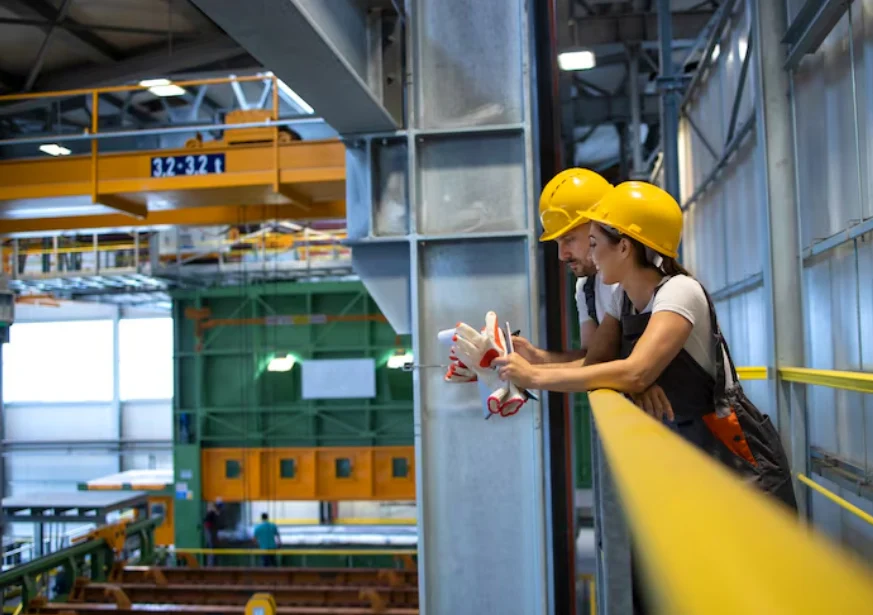
Lifting and moving heavy materials is a routine requirement in many industrial environments. Construction sites, manufacturing facilities, warehouses and shipping operations regularly handle equipment, machinery and oversized components that cannot be moved safely by hand. Using suitable lifting accessories is essential for controlling loads and reducing the risk of accidents during these operations.
Hoist straps are commonly used alongside cranes, hoists and other lifting equipment to secure and support loads. Available in different materials, lengths and configurations, they are designed to accommodate various lifting requirements. Understanding their construction, working load limits and applications helps businesses select appropriate equipment for their material handling operations.
What Are Hoist Straps?
Hoist straps are load-bearing accessories used to connect a load to lifting equipment such as a crane or hoist. They are commonly manufactured from synthetic webbing, wire rope or other specialised materials, depending on the intended application.
The strap is positioned around or attached to the load, allowing lifting equipment to raise, lower or move the object. Its construction distributes the load across the supporting material, helping maintain stability during lifting when correctly selected and installed.
Some designs feature flat webbing with reinforced loops at the ends, while others use continuous round configurations. The appropriate design depends on the load’s weight, shape, surface condition and lifting arrangement.
It is important to distinguish lifting slings from transport tie-down straps. Ratchet straps are designed to secure cargo during transportation and are not automatically suitable for overhead lifting. Only equipment specifically rated and approved for lifting should be used for hoisting operations.
Different Types of Hoist Straps and Lifting Slings
Lifting accessories are available in several configurations, each offering different characteristics for particular working environments.
1. Webbing Slings
Webbing slings are manufactured from strong synthetic fibres, commonly polyester or nylon. They feature a flat construction that distributes pressure across a wider contact area.
Their flexibility makes them suitable for lifting finished products, machinery components and materials with surfaces that could be scratched by metal lifting equipment.
Many webbing slings feature colour coding to indicate their working load limit. However, users should always check the identification label and manufacturer’s specifications rather than relying on colour alone.
2. Round Slings
Round slings consist of load-bearing synthetic fibres enclosed within a protective tubular sleeve. Their flexible construction allows them to adapt to different load shapes.
They are useful for lifting cylindrical objects, machinery and irregularly shaped components. Round slings can also provide a softer contact surface compared with certain rigid lifting accessories.
The protective outer sleeve should be inspected regularly because damage may expose or affect the internal load-bearing fibres.
3. Wire Rope Slings
Wire rope slings are constructed from multiple high-strength steel wires twisted together to form a rope. They are designed for demanding lifting applications where resistance to abrasion and mechanical wear is important.
These slings are commonly used in construction, shipbuilding, industrial maintenance and heavy equipment handling.
Their rigidity and strength make them suitable for certain heavy-duty applications, although they may not be the best option for delicate or easily scratched surfaces.
4. Chain Slings
Chain slings are manufactured from high-strength alloy steel components and are used for demanding lifting operations. They can be configured with one or multiple lifting legs, depending on the load and rigging arrangement.
Their robust construction makes them useful in foundries, manufacturing facilities and heavy engineering environments.
Some chain sling assemblies offer adjustable configurations, allowing operators to adapt the lifting arrangement to different load shapes. The chain grade, fittings and working load limit must be verified before use.
Common Applications of Hoist Straps
Lifting slings are used across a wide range of industries where heavy materials need to be moved safely and efficiently.
Construction and infrastructure: Slings are used to lift structural steel, concrete components, building materials and construction machinery. The choice of sling depends on the weight, shape and surface condition of the load.
Manufacturing facilities: Production environments use lifting accessories to move machinery components, fabricated metal parts and assembled equipment between workstations.
Warehousing and logistics: Lifting slings support the movement of large industrial goods and equipment during loading, unloading and material handling operations.
Shipping and marine operations: Ports and shipyards use specialised lifting accessories to handle cargo, equipment and heavy components. Environmental conditions such as moisture and salt exposure should be considered when selecting materials.
Mining and heavy engineering: These industries often require durable lifting equipment for machinery, structural components and other heavy loads. Chain and wire rope slings may be suitable for certain demanding applications.
How to Choose the Right Hoist Strap
Selecting an appropriate lifting sling requires more than checking the maximum load capacity. Several technical factors influence whether a particular product is suitable.
Working Load Limit (WLL): Check the manufacturer’s stated working load limit. The selected sling must have sufficient rated capacity for the intended lifting configuration and load.
Material: Polyester webbing may be suitable for many general lifting applications, while wire rope and alloy chain slings may be preferred for specific heavy-duty environments.
Length and width: Choose dimensions that accommodate the load and allow the required lifting arrangement without creating excessive tension or instability.
Load shape and surface: Consider whether the load has sharp edges, delicate finishes or irregular geometry. Protective sleeves or suitable edge protection may be necessary.
Lifting configuration: Vertical, basket and choker hitches have different capacity ratings. The working load limit can change depending on the hitch arrangement and sling angle.
Environmental conditions: Consider exposure to chemicals, heat, moisture, abrasion and outdoor conditions. Select a material designed for the relevant environment.
End fittings: Check whether the sling has reinforced eyes, hooks, master links or other compatible connections for the lifting equipment.
Understanding Safe Working Load and Sling Inspection
Safe lifting operations depend on using equipment within its rated limits. The working load limit is the maximum load specified by the manufacturer for a particular lifting accessory under defined conditions.
The permitted capacity may vary according to the hitch type, sling angle and number of supporting legs. In multi-leg arrangements, the load may not be distributed equally across every leg.
Before each use, operators should inspect the sling for visible damage. Important checks include:
- Cuts, tears or fraying in synthetic webbing.
- Exposed or damaged internal fibres.
- Broken wires, corrosion or deformation in wire rope slings.
- Cracked, stretched or damaged chain links.
- Damaged hooks, fittings and connecting components.
- Missing or unreadable identification labels.
Any sling showing signs of damage, uncertain capacity or missing identification should be removed from service until it has been assessed by a competent person. Regular inspections, appropriate storage and compliance with workplace lifting procedures are also essential.
Choosing a Reliable Lifting Equipment Supplier in Singapore
Businesses sourcing lifting accessories should compare product specifications, materials, dimensions and certification details before making a purchase. A suitable supplier can make it easier for maintenance teams and lifting professionals to identify equipment for different applications.
RS Singapore offers a selection of lifting slings and related material handling products from brands such as RS PRO. Its range includes flat webbing slings, round slings and chain slings in different lengths and working load capacities.
Buyers can review product information such as straight-pull load, sling type, length, width, material and applicable standards. These details are useful when matching lifting equipment to specific operational requirements.
For industrial buyers looking for hoist straps, selecting the correct sling material, configuration and working load limit is essential. Always verify compatibility with the lifting equipment, inspect the sling before use and follow the manufacturer’s instructions to support safe and reliable material handling operations.
Read more : Why Legal Compliance Should Be Part of Business Planning