
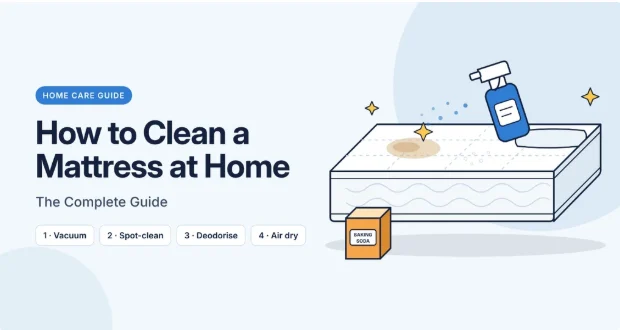
We change our bedsheets every week and wash the pillow covers regularly. But when was the last time you actually cleaned the mattress underneath?
For most of us, the honest answer is “never”. Even during the big Diwali safai, the mattress usually gets a quick dusting and goes straight back on the bed. Meanwhile, night after night, it keeps soaking up sweat, dead skin, dust, body oils and the odd spilt cup of chai. Over time this leads to stains, a musty smell, dust mites and allergies, and a mattress that gives up much before it should.
The good news is that you don’t need to call a professional cleaning service or buy costly products. With a few things already lying in your kitchen and a couple of hours, you can deep clean your mattress at home. This guide takes you through every step, from regular freshening up to removing tough stains, along with some simple habits that will keep your mattress clean for longer.
Why You Should Clean Your Mattress Regularly
We spend nearly one-third of our lives in bed, which makes the mattress one of the most used things in the house. Cleaning it regularly:
- Reduces allergies. Dust mites feed on dead skin and love warm, humid bedding. Their droppings are a common cause of sneezing, itchy eyes and breathing trouble.
- Removes bad smell. Sweat and moisture seep into the foam and fabric and slowly turn stale.
- Prevents fungus. In humid weather, especially during the monsoon, trapped moisture can lead to fungus and mildew spots.
- Makes the mattress last longer. A clean, dry mattress holds its shape and comfort for many more years, so your money is well spent.
- Gives you better sleep. A fresh, hygienic bed simply feels more inviting at the end of a long day.
What You Will Need
Most of these are easily available at home or at your nearest general store:
- Vacuum cleaner with an upholstery attachment
- Baking soda (a big packet)
- White vinegar
- Mild liquid detergent or dishwash liquid
- Hydrogen peroxide (3%, available at any chemist) for tough stains on light-coloured mattresses
- Enzyme-based cleaner (optional, for urine and other organic stains)
- Spray bottle
- Clean white cotton cloths or microfibre cloths
- Soft-bristled brush
- Cold water
- A few drops of essential oil like lavender, eucalyptus or lemongrass (optional)
Tip: Before starting, do check the care label on your mattress. Memory foam and latex mattresses should never be soaked, so always use as little liquid as possible.
Step-by-Step: How to Clean a Mattress at Home
Step 1: Remove All Bedding and Wash It
Take off the bedsheet, pillow covers, quilt and mattress protector. Wash them in hot water (as hot as the fabric label allows) to kill dust mites and germs. While the washing machine is running, start working on the mattress.
Step 2: Vacuum the Entire Mattress
Using the upholstery attachment, vacuum the top of the mattress slowly, going over each section more than once. Pay extra attention to the seams, edges and buttons, where dust and crumbs tend to collect. Then vacuum all four sides. You will be surprised at how much dust this step alone removes.
Step 3: Clean the Stains
Treat any stains before the full deodorising step. The golden rule is dab, never rub. Rubbing only pushes the stain deeper into the foam.
- General stains (food, drinks, dirt): Mix one teaspoon of mild detergent in a cup of cold water. Dip a cloth in it, squeeze it well and dab the stain. Then dab with a cloth dipped in plain water and press dry.
- Sweat and yellow stains: Mix equal quantities of white vinegar and water in a spray bottle. Spray lightly, wait for 10 minutes and dab dry. For stubborn yellow patches on light fabric, make a paste of baking soda and a little hydrogen peroxide, apply it, leave it on for 30 minutes and then wipe it off.
- Urine stains (common with small kids): Soak up as much as you can right away. Spray an enzyme cleaner or the vinegar solution, leave it for 15 minutes and dab dry. Then cover the area with plenty of baking soda and leave it for a few hours before vacuuming.
- Blood stains: Always use cold water, since hot water makes protein stains permanent. Dab with cold water and a little detergent, or a small amount of hydrogen peroxide on light fabrics, then press dry.
Caution: Always test the cleaning solution on a small hidden area first. Avoid hydrogen peroxide on dark or coloured fabric, as it can bleach it.
Step 4: Remove Odour with Baking Soda
Once the stains are treated and the surface is dry or only slightly damp, sprinkle a thick, even layer of baking soda over the whole mattress. For a mild fragrance, mix 8 to 10 drops of essential oil into the baking soda before sprinkling.
Use a soft brush to gently work it into the fabric. Leave it for at least 4 to 8 hours, or overnight if you can sleep in another room. The longer you leave it, the more moisture and smell it will absorb.
Step 5: Vacuum Once Again
Vacuum the mattress thoroughly once more to remove all the baking soda, along with the smell and moisture it has soaked up.
Step 6: Give It Some Dhoop
This is the step our mothers and grandmothers have always sworn by. If possible, put the mattress out in direct sunlight for a few hours, on the terrace, the balcony or near an open window. Sunlight works as a natural disinfectant: the UV rays help kill germs and dust mites, and fresh air drives out any dampness. A few hours of strong afternoon sun is one of the best (and completely free) mattress cleaners you can find. Just bring it in before evening, so it does not absorb moisture from the air again.
Step 7: Flip or Rotate the Mattress
If your mattress is double-sided, turn it over and repeat the vacuum and baking soda steps on the other side. If it is single-sided, rotate it so that the head side becomes the foot side. This spreads the wear evenly and prevents sagging.
Step 8: Make the Bed Again
Make sure the mattress is completely dry before putting on a fresh protector and clean bedsheet. Trapped moisture is the main reason for fungus and a musty smell.
How Often Should You Clean Your Mattress?
| Task | How often |
|---|---|
| Wash bedsheets and pillow covers | Every week |
| Wash the mattress protector | Every 1 to 2 months |
| Vacuum the mattress | Once a month |
| Deep clean with baking soda | Every 3 to 6 months (before and after the monsoon is ideal) |
| Rotate or flip the mattress | Every 3 months |
| Clean stains | Immediately, as soon as they happen |
Don’t Forget the Bed Frame
A clean mattress kept on a dusty or damp base will not stay fresh for long. Your bed frame plays a big role in keeping the mattress hygienic.
Solid wooden boxes and closed bases can trap moisture under the mattress, especially in humid cities like Mumbai, Chennai or Kolkata. A good metal bed with an open slatted or mesh base allows air to flow freely below the mattress, so sweat and humidity can escape instead of seeping in. Metal frames are also easy to wipe clean, do not absorb moisture, and are safe from termites (deemak), which are a common headache with wooden furniture.
To clean a metal frame, wipe it with a damp microfibre cloth and a drop of mild detergent, then dry it immediately. Make this a part of your routine whenever you deep clean the mattress.
Taking Care of Guest and Spare Mattresses
Spare mattresses are easily forgotten because they spend most of their time stored away. If you keep a folding bed for relatives who come to stay, for your work-from-home afternoon nap, or for the extra hands during a family function, a little care will keep it fresh and ready:
- Clean it before storing. Vacuum and air the mattress before folding the bed away. Never store a mattress that is even slightly damp.
- Air it out before guests arrive. Open the bed and let the mattress breathe in fresh air or sunlight for a few hours.
- Use a removable cover. A washable cover makes it easy to keep the mattress clean between uses.
- Store it in a dry place. Keep the folded bed away from bathroom walls and damp corners, and cover it with a cotton cloth instead of plastic, which traps moisture.
One big advantage of a folding bed is that it is light and easy to move, so taking the whole bed out to the balcony or terrace for some sun takes just a minute.
Tips to Keep Your Mattress Clean for Longer
- Use a waterproof mattress protector. It is the single best way to stop stains, spills and sweat from reaching the mattress.
- Avoid eating in bed. Crumbs attract ants and cockroaches, and spills are the most common cause of stains.
- Let the bed breathe. After waking up, keep the bedsheet pulled back for half an hour so moisture can dry out before you make the bed.
- Have a bath before bed. Less sweat and body oil means a fresher mattress, especially in summer.
- Keep pets off the bed, or wash the bedding more often if they share it with you.
- Keep the room airy. Open the windows on sunny days, and run a dehumidifier during the monsoon if your room tends to get damp.
When Should You Replace Your Mattress?
Even with the best care, no mattress lasts forever. It is time for a new one if you notice:
- Visible sagging, lumps or permanent body marks
- A smell or stains that do not go even after cleaning
- Fungus or mildew inside the mattress
- Increasing allergies, or waking up with body ache and stiffness
- It is more than 7 to 10 years old
Frequently Asked Questions
Can I clean a mattress with just baking soda?
Yes. For regular freshening up, a layer of baking soda left for a few hours and then vacuumed is enough to remove smell and absorb moisture. Stains need to be cleaned separately.
How long does a mattress take to dry after cleaning?
After cleaning stains, give it 4 to 6 hours in a well-ventilated room under the fan, or less in direct sunlight. Always make sure it is fully dry before putting the bedsheet back on.
Can I steam clean my mattress?
Steam can kill dust mites and germs on spring and regular foam mattresses, but avoid it on memory foam and latex, as heat and moisture can damage them. Always let the mattress dry completely afterwards.
Is vinegar safe for mattresses?
Diluted white vinegar (half vinegar, half water) is safe for most mattress fabrics when used in small quantities. The smell goes away once it dries.
How do I get rid of a musty smell from my mattress?
Vacuum it, cover it with baking soda overnight, vacuum again and keep it in the sun for a few hours. Then check that your bed base allows enough airflow so that moisture does not build up again.
Final Thoughts
Cleaning a mattress at home is much simpler than most people think: vacuum it, treat the stains, use baking soda to remove odour, give it some sun and keep it covered with a protector. Do a deep clean every few months, pair your mattress with a well-ventilated bed frame, and you will enjoy a fresher, healthier bed and better sleep for years to come.
Looking for a strong, easy-to-maintain bed for your mattress? Explore HoneyTouch’s range of durable metal beds and space-saving folding beds, made for comfort, hygiene and everyday Indian homes.
Read More: Easy Home Decor Updates That Make a Surprisingly Big Difference