
Introduction
Event staff often work behind the scenes, but their organization affects the entire guest experience. Whether they are supporting conferences, festivals, school events, trade shows, charity activities, or local markets, staff members need quick access to supplies throughout the day. When tape, badges, pens, chargers, first-aid items, guest lists, samples, or signage tools are hard to find, small delays can turn into visible problems.
Keeping supplies organized is not only about neatness. It is about speed, confidence, and reducing stress during busy moments. A well-prepared supply system helps staff respond quickly without interrupting the flow of the event.
Build Supply Kits by Function
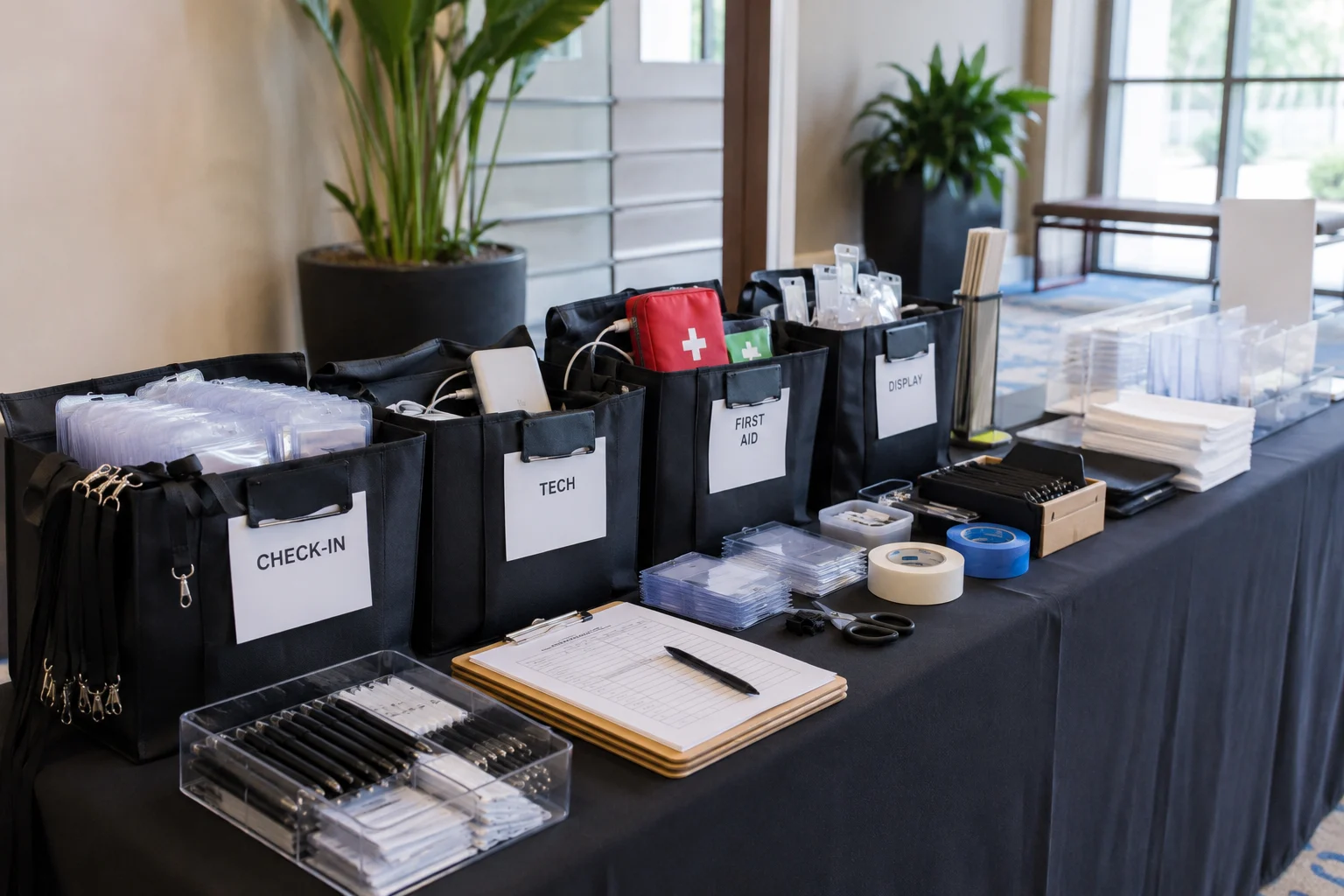
One of the most effective ways to organize event supplies is to create separate kits based on function. Instead of placing everything into one large box, divide items by how they will be used. A check-in kit might include badges, pens, wristbands, guest lists, and lanyards. A display kit might include tape, clips, scissors, signage, and table materials. A tech kit might include chargers, adapters, extension cords, and power banks.
This setup helps staff find what they need without searching through unrelated items. It also makes it easier to assign responsibility. One person can manage registration supplies while another handles display materials.
For flexible event storage, many teams use Custom Tote Bags because they are lightweight, reusable, and easy to label for different stations or staff roles.
Keep High-Use Items Within Reach
Not all supplies are used equally. Some items are needed constantly, while others are only useful in emergencies. High-use items should be placed where staff can reach them quickly. Pens, tape, scissors, guest lists, badges, phone chargers, and cleaning cloths should not be buried under backup supplies.
A good approach is to create a “daily access” section for items used throughout the event. Backup materials can stay in a separate storage box or behind the booth.
This prevents the main work area from becoming overcrowded while still keeping essential supplies close.
Use Secure Storage for Important Items
Some event supplies need to be protected more carefully. Cash boxes, staff phones, keys, small electronics, guest data, badges, and private documents should not be left in open containers. Crowded event spaces can become distracting, and loose items are easy to misplace.
For these situations, Custom Tote Bags with Zipper can be useful because they help keep important supplies enclosed while still being easy to carry between event areas.
A secure bag is especially helpful for mobile staff who move between registration, backstage, storage rooms, and vendor areas.
Label Everything Clearly
Labels reduce confusion, especially when volunteers or temporary staff are involved. Bags, bins, folders, and supply pouches should have simple labels such as “Registration,” “Tech,” “First Aid,” “Display,” or “Giveaways.”
Avoid overly detailed labels that people will not read during a busy moment. Clear and short labels work best. Color coding can also help if there are several stations.
When staff can identify supplies quickly, they are less likely to interrupt others with repeated questions.
Reset Supplies During Quiet Moments
Event organization should not wait until the day is over. During quieter moments, staff should reset supplies. Return pens to the check-in table, replace empty badge stacks, tidy cables, restock brochures, and remove trash from work areas.
These small resets prevent the event from becoming chaotic later. They also make staff transitions easier if shifts change during the day.
Plan the Pack-Up Before the Event Ends
Packing up is often rushed, especially after a long event. If supplies are not sorted properly, the next event becomes harder. Staff should have a simple pack-up plan before the event begins.
Reusable supplies, damaged items, lost-and-found objects, leftover materials, and trash should all be separated. A quick checklist can prevent important tools from being thrown into random boxes.
Conclusion
Event staff can keep supplies organized by building function-based kits, keeping high-use items accessible, using secure storage for important materials, labeling clearly, and resetting during the event. These small systems make the day smoother for staff and guests alike.
A well-organized event does not happen by accident. It is built through practical habits that help people find what they need when they need it.
Read more: Why Customer Feedback Should Influence Business Decisions