Art has always evolved alongside technology. From the invention of new pigments to photography, printing, and computer graphics, artists have continually adopted tools that expand what they can imagine and produce. Today, digital technology is changing the creative process faster than ever. Tablets, design software, 3D modeling programs, artificial intelligence, virtual reality, and online platforms are giving modern artists new ways to create, experiment, and share their work.
These tools are not replacing traditional creativity. Instead, they are expanding the possibilities available to artists and making the creative process more flexible, accessible, and connected.
Digital Drawing Has Become More Natural
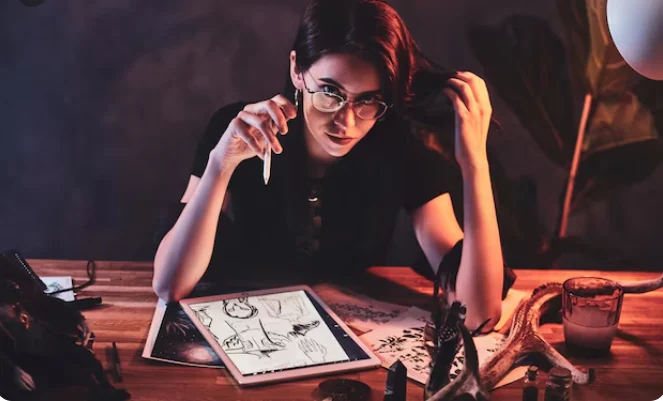
One of the most noticeable changes is the growth of digital drawing and painting. Modern tablets and styluses can imitate the feeling of working with pencils, brushes, charcoal, and other traditional materials.
Artists can now sketch directly onto a screen while adjusting brush texture, opacity, pressure, and color with impressive precision. Unlike traditional materials, digital programs also allow creators to undo mistakes, rearrange layers, resize elements, and test different color combinations without starting over.
This flexibility encourages experimentation. An artist can create several versions of the same illustration, compare them, and make changes within minutes.
Digital drawing has become especially valuable for illustrators, concept artists, comic creators, graphic designers, and animators who need to produce and revise artwork efficiently.
Software Makes Experimentation Easier
Creative software has changed the way artists approach experimentation.
Instead of committing permanently to one technique, creators can explore different styles, compositions, textures, and effects before deciding on a final direction. Layers allow individual parts of an artwork to remain separate, while filters and editing tools make it easy to explore alternative visual treatments.
Artists can also combine photography, drawing, typography, scanned textures, and 3D elements within a single project.
This has blurred the boundaries between artistic disciplines. A modern artwork may contain hand-drawn sketches, digitally painted elements, photographs, and computer-generated effects all within the same composition.
As a result, artists are increasingly developing hybrid creative styles that would have been difficult to produce using traditional tools alone.
3D Technology Is Expanding Artistic Possibilities
Three-dimensional software is another major influence on modern art.
Artists can build digital sculptures, characters, environments, products, and architectural concepts without needing physical materials. These creations can be rotated, reshaped, textured, illuminated, and viewed from almost any angle.
Digital sculpting has become particularly important in industries such as gaming, film, animation, advertising, and product design.
However, 3D technology is also influencing traditional art. Some sculptors design objects digitally before producing them through 3D printing. Others use digital models to study proportions and lighting before beginning physical sculptures or paintings.
This combination of virtual planning and physical creation demonstrates how digital and traditional techniques can work together rather than compete.
Artificial Intelligence Is Becoming a Creative Assistant
Artificial intelligence has introduced another major shift in the artistic process.
AI-powered tools can help artists generate visual concepts, explore compositions, remove backgrounds, enhance images, create textures, and experiment with different visual directions.
For some creators, AI functions as a brainstorming tool. Instead of producing a finished artwork automatically, it can generate references or unexpected ideas that inspire further development.
Artists may take an AI-generated concept and completely redesign it through illustration, photography, digital painting, or mixed media.
At the same time, AI has created important discussions about authorship, copyright, originality, and the use of existing artwork in training systems. These debates will likely continue as both technology and creative standards evolve.
Virtual Reality Creates Immersive Art Studios
Virtual reality is allowing artists to work inside three-dimensional digital spaces.
With VR tools, creators can paint, sculpt, and design objects around themselves instead of working only on a flat screen. A brushstroke can become a three-dimensional line floating in virtual space, while sculptures can be created at almost any scale.
This opens entirely new creative possibilities.
Artists can design immersive exhibitions that visitors explore rather than simply observe. Virtual galleries can include sound, animation, interactive objects, and environments that change depending on the viewer’s movement.
The result is a form of art that combines visual design, technology, storytelling, and physical interaction.
Online Platforms Have Changed Collaboration
Digital tools have also changed how artists work with other people.
A designer in India can collaborate with an illustrator in Europe, an animator in Japan, and a musician in the United States without everyone being in the same studio.
Cloud-based platforms allow creative files to be shared and reviewed instantly. Team members can provide comments, upload revisions, and track changes throughout a project.
This type of collaboration has become especially important for creative industries where projects often involve specialists from multiple disciplines.
Digital communication has therefore transformed the traditional idea of an artist working alone into a more connected and international creative environment.
Artists Can Reach Audiences Directly
Technology has changed not only how art is created but also how it is distributed.
Previously, artists often depended heavily on galleries, publishers, agencies, or exhibitions to reach large audiences. Today, social media platforms, portfolio websites, digital marketplaces, and online communities allow artists to present their work directly to viewers.
An emerging artist can publish an illustration online and potentially reach thousands of people within hours.
Digital platforms also allow artists to sell prints, accept commissions, offer digital products, teach courses, or build communities around their creative work.
This direct connection between artists and audiences has created new opportunities for independent careers.
Traditional Skills Still Matter
Despite the growth of digital technology, traditional artistic knowledge remains extremely valuable.
Understanding composition, perspective, anatomy, color theory, storytelling, and visual balance is useful regardless of whether an artist works with paintbrushes or software.
Technology can make certain tasks faster, but it does not automatically create strong artistic ideas.
The most effective digital artists often combine technical skills with traditional creative principles. They understand not only how to operate software but also why certain visual decisions communicate more effectively than others.
Conclusion
Digital tools are transforming modern art by giving creators more freedom to experiment, collaborate, revise, and explore new forms of expression. From digital painting and 3D modeling to artificial intelligence and virtual reality, technology continues to expand the creative possibilities available to artists.
However, the artist remains at the center of the process. Tools may change, but imagination, curiosity, observation, and personal expression continue to shape meaningful artwork.
The future of art will likely involve an even closer relationship between physical and digital techniques. Rather than replacing traditional creativity, digital technology is creating a larger artistic toolbox—one that allows modern artists to turn ideas into experiences that previous generations could only imagine.
Read more: Why Legal Compliance Should Be Part of Business Planning / The Technology Behind Faster and More Efficient Digital Experiences