
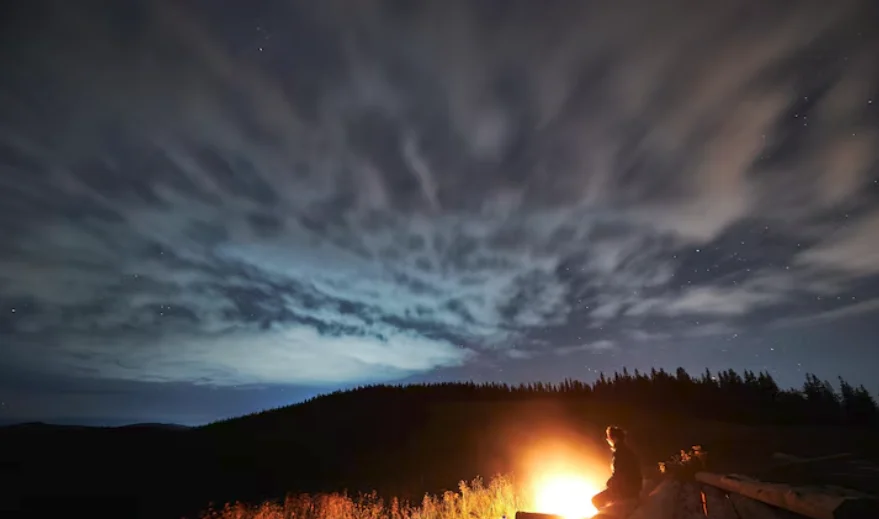
Aspen is celebrated for its mountain scenery, world-class skiing, and vibrant cultural attractions. Yet one of the area’s most remarkable experiences begins after the sun disappears behind the peaks.
As daylight fades, the surrounding mountains become silhouettes, temperatures drop, and the night sky takes center stage.
For visitors accustomed to brightly illuminated cities, spending an evening observing stars and constellations can offer a completely different perspective on Colorado’s Rocky Mountains.
Stargazing requires relatively little equipment, but thoughtful planning can transform a casual evening outdoors into a memorable experience.
From understanding the moon’s phases to choosing appropriate locations and transportation, a few simple preparations can make the night far more rewarding.
Why Mountain Skies Feel Different
Mountain destinations offer a distinctive setting for astronomy.
The combination of elevated terrain, dramatic horizons, and opportunities to travel away from heavily illuminated areas can create impressive nighttime viewing conditions.
However, altitude alone doesn’t guarantee exceptional stargazing.
Cloud cover, moonlight, atmospheric conditions, and nearby artificial lighting all influence what visitors can see.
A clear evening with limited moonlight may reveal significantly more stars than a cloudy night during a full moon.
Understanding these factors helps travelers choose appropriate viewing opportunities instead of assuming every night will look the same.
Discover Stars Above Aspen
Aspen has an established connection to astronomy education.
The annual Stars Above Aspen event brings together astronomy enthusiasts, families, and visitors for an evening of celestial discovery.
Organized in partnership with the Aspen Center for Environmental Studies, the event takes place on Aspen Mountain and has featured guided telescope viewing, astronomy demonstrations, and educational activities.
The 2026 event was held on August 10 at the Sundeck, approximately 11,212 feet above sea level.
Visitors participated in activities ranging from telescope observations to hands-on science experiences.
The official Stars Above Aspen event page provides an example of how the destination combines mountain recreation with scientific education.
Future dates and ticket arrangements should be checked directly with organizers.
Learn to Recognize the Constellations
Stargazing becomes more interesting when visitors can identify what they’re seeing.
Rather than attempting to memorize dozens of constellations, begin with a few recognizable patterns.
The Big Dipper is a useful starting point for many Northern Hemisphere observers.
Its stars can help locate Polaris, commonly known as the North Star.
Depending on the season, other constellations become more prominent.
Winter skies may feature Orion, while summer evenings offer opportunities to observe different sections of the Milky Way.
The NASA Night Sky Network provides astronomy education resources that can help beginners understand the night sky.
A little preparation makes the experience more engaging.
Understand the Importance of Moonlight
The moon is beautiful to observe, but its brightness can make faint stars more difficult to see.
Travelers hoping to photograph the Milky Way or observe dim celestial objects may prefer nights around the new moon.
Those interested in lunar photography, however, might choose a different phase.
The U.S. Naval Observatory provides astronomical data, including information about moon phases and celestial events.
Checking the lunar calendar before scheduling a stargazing evening can help set realistic expectations.
It also allows photographers to choose conditions that suit their creative goals.
Choose a Viewing Location Responsibly
Finding a darker location can improve stargazing, but visitors should never sacrifice safety or access rules for a better view.
Avoid stopping along narrow mountain roads or parking in undesignated areas.
Do not enter closed trails or private property.
Instead, identify accessible public locations where nighttime visits are permitted.
Check operating hours, parking rules, and seasonal restrictions before departing.
The Aspen Chamber Resort Association provides visitor information that can help travelers research local attractions and activities.
When in doubt, organized astronomy events are often a practical choice because they provide designated viewing areas and knowledgeable guides.
Plan Transportation Before Darkness Falls
Nighttime mountain outings require more preparation than daytime sightseeing.
Road visibility, unfamiliar routes, changing temperatures, and limited parking can complicate an otherwise enjoyable evening.
Visitors who prefer not to drive may consider professional transportation.
For example, Aspen WayToGo Transportation offers private chauffeur services in the Aspen-Snowmass region.
Travelers researching evening transportation can review the company’s services and click here to make a reservation after confirming availability and their intended itinerary.
Before booking, communicate the planned destination, passenger count, departure time, and expected return arrangements.
Not every scenic location is appropriate for nighttime vehicle access, so route suitability should be confirmed.
Consider a Professional Car Service
Some travelers prefer having a dedicated driver for evening outings, especially when traveling with family members or a small group.
Aspen WayToGo is a local transportation company advertising professionally chauffeured services, airport transportation, and private rides.
Its website describes a fleet that includes large SUVs designed to accommodate passengers and luggage.
Visitors comparing options for the best black car service in Aspen should evaluate actual service details rather than relying solely on promotional rankings.
Important considerations include vehicle capacity, pickup procedures, driver communication, pricing, and scheduling flexibility.
The company provides contact information through its official website so prospective customers can discuss their requirements directly.
Dress for Mountain Temperatures
Even during summer, temperatures can fall significantly after sunset.
A comfortable afternoon doesn’t guarantee a warm evening.
Visitors should bring appropriate layers, including insulated clothing when necessary.
Closed-toe footwear and gloves may also be useful depending on the season and elevation.
For longer viewing sessions, a blanket or portable seating can improve comfort.
The National Weather Service provides forecasts and alerts that should be reviewed before spending an extended period outdoors.
If conditions become unsafe, postpone the outing.
No photograph or celestial event is worth unnecessary risk.
Protect Your Night Vision
One of the simplest ways to improve stargazing is to reduce exposure to bright light.
Human eyes need time to adapt to darkness.
Repeatedly checking a bright phone screen can interrupt that adjustment.
A flashlight with a red-light setting may help visitors navigate without creating as much disruption to night vision.
However, lighting should always be sufficient for safe movement.
The goal isn’t complete darkness at all costs.
It’s finding a balance between visibility, safety, and preserving the ability to observe faint stars.
Try Night-Sky Photography
Photographing stars introduces an additional creative challenge.
Unlike ordinary daytime photography, astrophotography often requires longer exposures, stable camera positioning, and careful focusing.
A tripod can be particularly helpful.
Many modern smartphones also offer night photography settings that make introductory experiments possible.
Start with simple compositions.
Include a mountain silhouette, tree, or recognizable landscape feature in the foreground.
This gives the photograph a sense of place rather than showing an isolated collection of stars.
Experiment with exposure settings and review the results.
Night photography rewards patience more than speed.
Respect Wildlife and Natural Environments
Mountain landscapes remain active ecosystems after dark.
Wildlife may be moving through areas that appear quiet during the day.
Visitors should avoid approaching animals, leaving food behind, or disturbing natural habitats.
The Leave No Trace organization provides guidance on responsible outdoor recreation.
Its principles are especially relevant when visiting natural areas at unusual hours.
Remain on permitted routes, minimize unnecessary noise, and carry out everything brought into the area.
Responsible behavior helps protect the landscapes that make outdoor experiences possible.
Make Stargazing a Shared Experience
Stargazing doesn’t need to be a technical astronomy lesson.
For families, it can become an opportunity to encourage curiosity.
Children might enjoy identifying bright stars, learning about planets, or hearing stories associated with constellations.
Couples may appreciate the quiet atmosphere and mountain scenery.
Groups of friends can turn the evening into a relaxed activity away from busy restaurants and entertainment venues.
The experience works because it invites people to slow down.
Instead of moving between attractions, everyone spends time observing the same sky.
The Night Sky Is Worth Staying Up For
Aspen’s mountain setting offers countless memorable daytime experiences, but visitors who return to their accommodations immediately after dinner may miss another side of the destination.
A clear night can reveal constellations, planets, and celestial patterns that are easy to overlook in everyday life.
Organized astronomy events add educational opportunities, while independent outings can provide quiet moments of discovery.
The best approach combines curiosity with preparation.
Check the weather, understand the moon phase, choose a permitted viewing location, and organize transportation when necessary.
Then allow enough time to enjoy the experience without rushing.
The mountains may be Aspen’s most recognizable feature, but on the right evening, the sky above them can become the most memorable view of all.
Read More : Why Shoulder-Season Travel Can Offer a Better Experience