
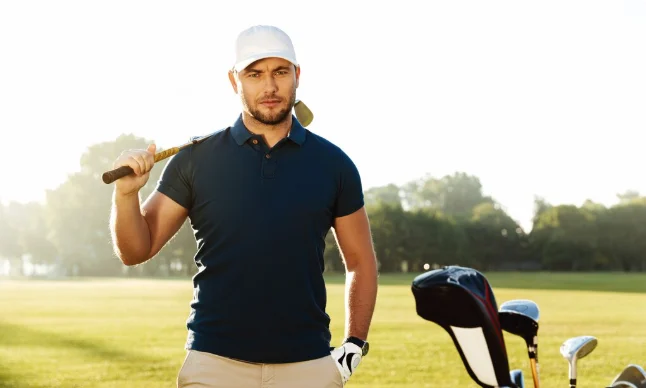
Golf shirts look simple from across the pro shop shelf. Grab one, try it on, buy it. But the fabric against your skin for four hours in blazing sun does more work than people realize. golf shirts means understanding stretch, breathability, and sun protection before style even gets a vote. A stiff collar can cut into your neck turn mid swing. Heavy cotton soaks up sweat and gets heavier by the back nine. This guide skips the marketing fluff and sticks to fabric facts and fit rules that actually change how a round feels.
Why Does Fabric Weight Matter More Than You Think?
Most golfers blame their swing when a shirt feels off, but the shirt is often the real problem. Lightweight polyester blends move heat away from skin fast, which keeps your arms loose through eighteen holes. Thick cotton holds onto water, and wet fabric clings to skin and pulls at your shoulders exactly when you need free rotation. The best performance shirts sit under five ounces per square yard, light enough that you forget you’re wearing one. Heavier shirts might look sharp standing still, but golf is a moving sport, and a shirt that fights your swing costs strokes nobody will ever blame on fabric.
What Should You Check Before Buying One?
- Sun protection rated UPF 30 or higher, since four hours outside adds up fast
- Four way stretch so your swing never feels boxed in at the top
- A collar built to flex, not choke your neck on the backswing
- A fabric blend heavy on polyester, light on pure cotton
- Odor control woven into the fabric itself, not sprayed on after the fact
Does Sun Protection Actually Make a Difference?
Yes, and the numbers back it up. A shirt rated UPF 30 blocks roughly 97 percent of ultraviolet rays, while UPF 50 pushes closer to 98 percent. That gap looks small on paper, but it adds up across a whole season outside. Sunscreen wears off by hole nine, usually without you noticing. Fabric doesn’t wear off the same way. A tightly woven fabric blocks more sun than a loose weave, regardless of how dark the colour is, which surprises players who assume black automatically means more protection. A light shirt with a strong UPF number beats a dark shirt with no rating every time the sun is actually out.
What’s the Deal With Colour and Heat?
Dark colours absorb more heat, light colours reflect it, simple physics that hasn’t changed. On a thirty five degree day, a black shirt can run noticeably hotter against the skin than a white or pale blue shirt made from the exact same material. That extra heat adds fatigue by hole fourteen, even when you don’t feel it building. Plenty of golfers choose dark shirts anyway because they hide sweat marks better, a fair trade some players are genuinely happy to make. There’s no wrong answer here, just a call worth making on purpose instead of by accident.
How Do the Main Fabric Types Compare on the Course?
| Fabric Type | Best For | Watch Out For |
| Lightweight polyester blend | Hot, humid rounds | Can feel thin in cold weather |
| Cotton pique | Casual look, clubhouse wear | Soaks up sweat, gets heavy fast |
| Performance mesh panels | Extra airflow under the arms | Less durable after years of wear |
So Which Shirt Should You Actually Grab?
There’s no single perfect shirt for every golfer. A player walking eighteen holes in January wants something different than someone riding a cart in July heat. What stays true is this: fit beats fashion, breathable beats heavy, and a shirt that disappears on your body beats one that only looks good standing still. Swing an imaginary club in the fitting room, and if your shoulder pulls even slightly, put it back.
Read more: The Fashion Basics That Make Everyday Styling Easier